Here follows my utterly amateur review of The Lord of Cries, which I saw at the Santa Fe opera house. I’ve seen a few fine arts majors sing arias and put on small concerts for classes, but I’d never been to a real one before last night. It was quite the experience.
The Lord of Cries is a new opera being shown for the first time this summer. The story is a combination of Bram Stoker’s Dracula and The Bacchae, an ancient Greek play by Euripides. The music is very contemporary, though, more of a tonal landscape with emotive percussion. I’ve listened to a little bit of contemporary classical over the years; one the one hand I love the dark and experimental feel it often has (and this opera has that) but on the other hand it can be . . . emotionally unsatisfying. It doesn’t sweep you up with soaring beauty or romance the way Mozart or Puccini would. Instead, it lifts you a bit and then drops you down into wailing or dissonance. In this case, the music fits the subject matter, and though I wouldn’t put it on for a cozy reading night, I liked it.
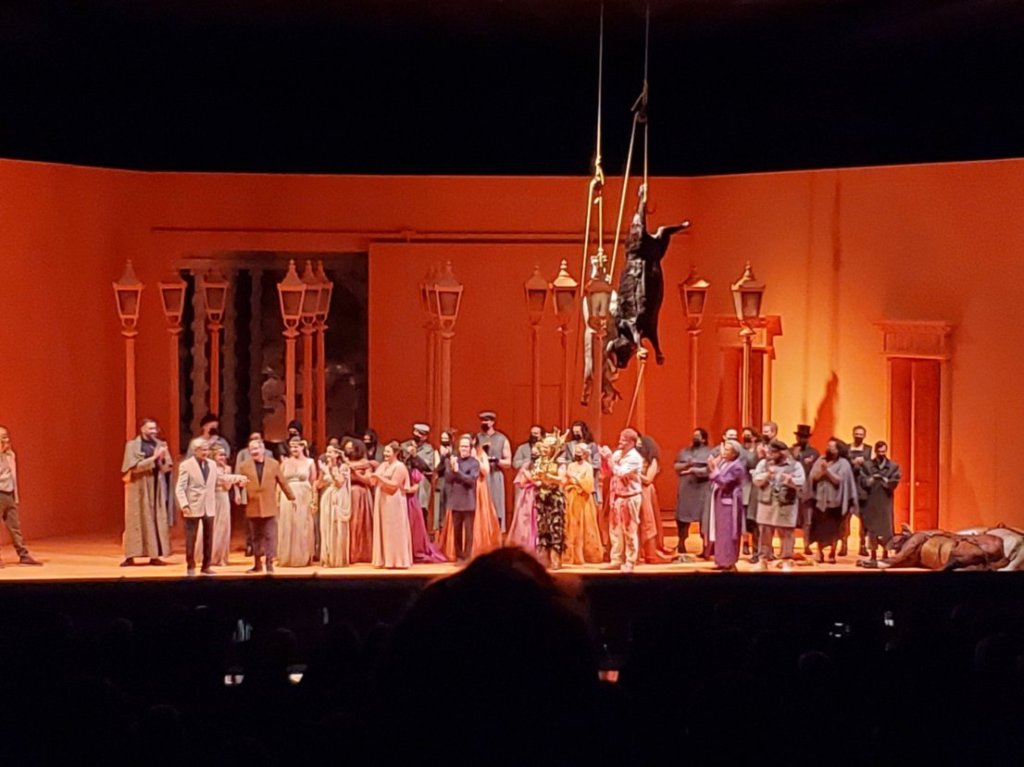
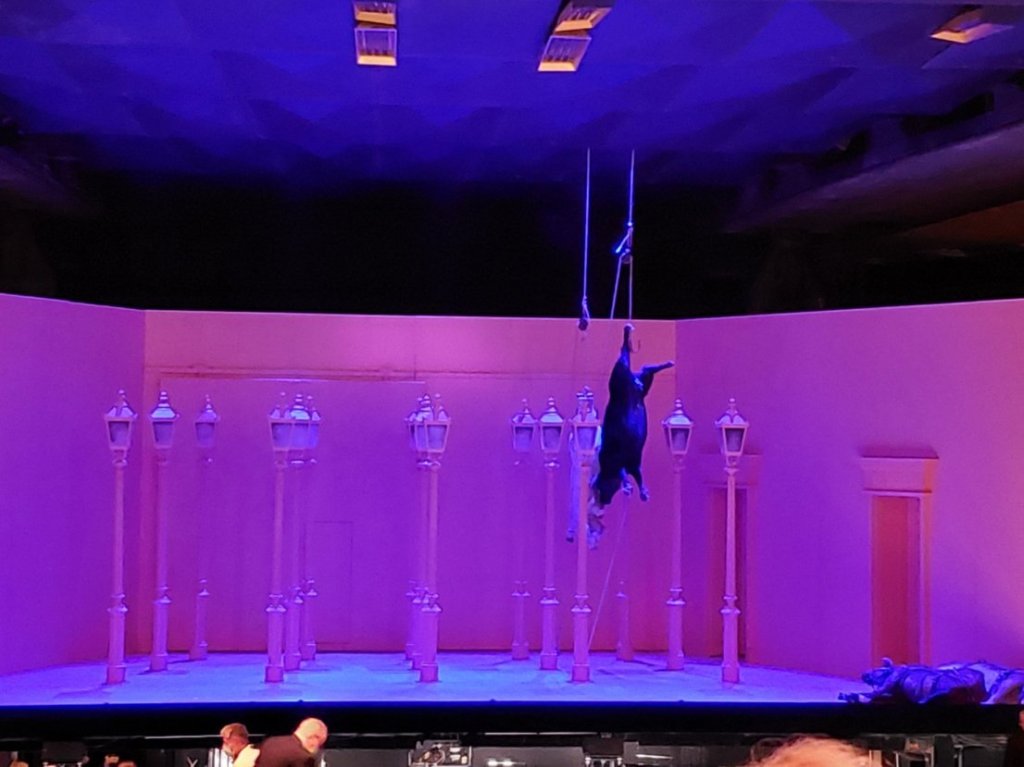
I also mostly enjoyed the sets and costumes. The sets were kept fairly simple and straightforward, with blank walls that textures and shadows would be projected onto to change the location or mood. There were a couple of really clever bits where the singers “shadows” would stalk the walls or transform, and I loved how the projected wallpapers went from simple and elegant to complex and vaguely creepy as the characters’ mental states grew more agitated. The costumes were an interesting mix of Victorian gowns and frock coats and ancient Greek robes and cloaks.
Dionysus himself was portrayed as very fluid in time, in place, and in gender, with costumes ranging from a bronze breastplate to a golden gown to a snazzy modern tapestry suit. Sung in a soaring counter-tenor, which I’d never heard before, Dionysus came across as both seductive and just a tad unsettling in his power, which makes total sense for Dionysus. I liked this a lot.
My favorite characters, though, were the three “odd sisters” loosely based on Dracula’s trio of female vampires at his castle. These women were a lot of fun to watch, eerie and powerful and with a sick sense of humor. Their singing was wicked in the best way and I loved every minute of them. The main characters, though, didnt excite me all that much. Even Dionysus felt oddly passionless in parts of the play.
So here’s the thing. This opera is billed as a mashup of Dracula and the Bacchae, but it’s mostly the Bacchae. They use names from Dracula but they change them all around and the characters in the opera have very little to do with Stoker’s originals. Here, Jonathan Harker is married not to Mina but to Lucy Westenra, who is secretly in love with Doctor John Seward. Seward is also in love with Lucy, but they both resist out of honor and loyalty to Jonathan. As Dionysus whips all of London into a frenzied Bacchanal, he especially urges Lucy and John to give in to their passion and take what they want from each other. As Bacchanals tend to do, it ends badly. It’s implied that if Lucy and John had just given in sooner, things would have ended better, but I don’t know about that. The themes were a bit muddy.
As a fan of Victorian horror, I was disappointed that Dracula wasn’t integrated better. Some of the nods to it felt kind of pointless–a big scene was made of his arrival at Whitby but it didn’t really connect to the rest of the plot, and about halfway through the Dracula references were mostly abandoned. I mean, they straight up just say Dracula is Dionysus and he wants Carfax Abbey to reconsecrate it as a temple to himself and from then on the character is 95% Dionysus and 5% “but he has Dracula’s wolf powers.” Still, the story actually got better and more focused at that point. Once they really committed to just doing the Bacchae the story moved faster, the singing was more impassioned, the drama was more beautiful and horrific. It felt very Greek and I liked it.
Still, I would have liked more frenzy out of the big bacchanal scene. They had a stage full of women and Dionysus powerfully singing to them, and they even brought out a couple of sacrificial bulls (prop bulls tied up, not real animals) but they were all standing oddly still and stiff. I had this problem with Lucy and John’s repressed passion, too. Most of the time it felt not repressed but just absent. And Van Helsing spent much of the story just standing around silently watching Lucy and John.
I get that it’s hard to sing well while you’re flailing your arms or dashing across a stage, but a little more movement would have gone a long way toward selling the story. That’s especially true in the bacchanal.
So the play was uneven. The beginning was a little slow and confused, the nods to Dracula were sometimes muddled or even pointless, the physical acting was oddly static most of the time. The stage effects were often cool and clever, the music was dark and interesting, some of the singing and costuming were amazing. Going to the opera itself was a fancy night out, and the opera house was lovely. It felt very cultured without being too stuffy or elitist. It didn’t turn me into an ardent opera fan but I’d be willing to go again. Maybe for one of the classics next time.


 Oddly Cultured
Leave a reply to The Sister Blog and Finished Stitches – Cauldron Comforts Cancel reply