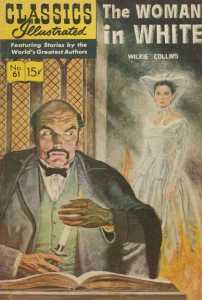
 Wilkie Collins’ The Woman in White is not a horror novel. It’s pretty gothic, featuring a damsel in distress and her mysterious doppelganger, a bleak manor house falling to ruin, and several improbable plot twists, but it’s not a horror novel no matter what my list claims. It’s more of a mystery, almost a detective novel. Our hero, Mr. Hartright, isn’t a professional detective but he is investigating a terrible mystery. The story is mostly his case notes–statements from witnesses, explanations from lawyers, a diary of Hartright’s own attempts to solve the mystery and save his lady love. It was all very dramatic, a mystery with a nice foreboding atmosphere.
This is pretty common with gothic novels, but all the characters in this book are a bit flat and cartoonish. Mr. Hartright is so perfectly noble, the damsel in distress is pretty and sweet and nothing else, her husband Sir Percival is a hot-tempered jerk, and none of them really change as the story progresses. The main characters are nothing special. The minor characters really steal the show–the titular woman in white is odd and tragic, the damsel’s uncle is extremely punchable, the villainous Count Fosco is very likable in spite of being an evil genius, and there are many more well-drawn minor players in this drama. Many of these characters get chances to speak for themselves, either in witness statements or in direct quotes written in Mr. Hartright’s case notes, and this really brings these minor characters to life. These minor players were the highlights of the book for me.
I also enjoyed the plot, though. It was clever and largely based on Collins’s legal knowledge. I’m being really vague about it because I don’t want to ruin the mystery. Many gothic plots are either really obvious or so weird you can’t possibly guess what will happen next, but The Woman in White hits a sweet spot between these two extremes. It was delicious to watch the plot unfold and I don’t want to spoil it for anyone else. I know this is an old book (published in 1859) but it’s a pretty minor classic so many people won’t know a lot about it. I know I didn’t.
Speaking of publishing, this was originally a serial novel, published one chapter at a time in a literary magazine run by Charles Dickens. It’s written with lots of memorable scenes and cliffhangers throughout, designed to keep readers excited for each new chapter. Being a serial also explains the cartoonish characters–flat, exaggerated characters are fun and easy to remember from week to week, and you can gossip about them with friends just the way people do now about popular TV or internet series.
Being a serial probably explains the two endings as well. Without giving too much away, there are two main villains: Sir Percival and his friend Count Fosco. Our hero is after both of them, but he catches up to Sir Percival first, with dramatic and satisfying results. It’s a great scene and would have been a great ending, but instead Collins drags the story out for several more chapters while our hero tries to defeat Count Fosco. It’s a little weak and random, as if someone asked Collins to stretch out the story so they could fill an extra few issues of the magazine. Serial novels are kind of notorious for stretching on too long, and this one is definitely guilty.
Still, I enjoyed this book quite a bit and I highly recommend it. It’s especially good for people who love Victorian atmosphere and a bit of drama but don’t love blood and guts. This story is thrilling and a bit spooky in places, but it’s not violent or horrific at all. I give it four haunted mansions for being a worthy addition to the Ann Radcliffe “terror not horror” tradition.


 Oddly Cultured
Leave a reply to Gothic Novel Recommendations – Geek Goth Grotesquerie Cancel reply