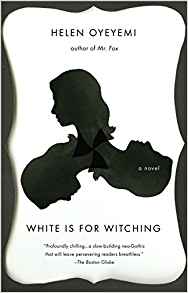
 I have this theory about novels. My theory is that each novel has several dimensions–character depth, story arc, world building, theme, symbols, and beauty of language, to hit the highlights–and it’s nearly impossible for a novel to be great in every dimension at once. Most novels, even great ones, will be amazing in two or three of these areas while falling down a bit in others. Good reviewers try to be up front about which dimensions they value the most and be fair to books that are great in other dimensions that other readers might really value.
I’m not a particularly good reviewer, so I often just rate novels according to what I look for and let all of you decide whether our tastes match. Helen Oyeyemi’s White is for Witching, though, gave me such mixed feelings that I’m not even sure how much I like it, and whether you’ll like it heavily depends on why you read.
Let me start with symbols and beauty of language, because these are the parts of writing Oyeyemi is great at. From the first pages, this book will wrap you in beautiful words and unique turns of phrase. Her style is poetic and her symbols are layered and mythic. Her heroine Miri, described in everyone’s words but her own, is a wasting beauty afflicted with pica, driven to eat chalk and dirt and plastic and repulsed by food. Her troubles are deeply psychological but also deeply mystical, described in tales of soucouyant and references to Snow White’s poisoned apples. If you read to be swept away by delicious language and layered images you will love this book.
That’s not what I usually read for, though. I usually read for depth of character and complex story arc, and White is for Witching is lacking on both these dimensions. Oyeyemi’s beautiful but stylized writing makes the characters, by contrast, seem flat and unreal. They often blend together, sometimes so much that you can’t tell who’s talking and it doesn’t matter anyway. The narration switches confusingly between Miri’s brother Elliot, her girlfriend Ore, and Miri’s house itself. The plot is fairly simple but full of holes and dropped side stories. There are several interesting bit players–Miri’s father Luc, the housekeeper Sade, a school enemy named Tijana who thinks Miri assaulted her cousin–that are all introduced, discussed, and then dropped in the most frustrating way.
My guess is that these characters, all immigrants in some way, were meant to enhance a theme of immigration and ancestry that’s woven through the book. Ore and Miri’s love story creates a heavy contrast between Ore, Nigerian by descent and proudly British by adoption, and Miri who is cradled and often overwhelmed by the generations of witchy women she comes from. This exploration of ancestry and identity is powerful, and with careful plotting these side characters might have enhanced this exploration instead of distracting from it.
In the end, it was a two star book for me. The beautiful writing was like a veil between me and the characters–I could never see them properly or get a feel for who they really were, so in the end I was more puzzled than moved. Then again, some readers love a good puzzle.
Now I move on to Rebecca, by Daphne du Maurier.


 Oddly Cultured
Leave a reply to Gothic Novel Recommendations – Geek Goth Grotesquerie Cancel reply