Calling yourself goth often comes with a lot of pressure to be all goth all the time in every way, and my interests go way beyond that. I love horror and gothic lit and black clothes, I like Tones on Tail and Sisters of Mercy, I have a taxidermy bat on a shelf in my living room. I like all of that, but I also like popular science and history, The Blues Brothers, cooking, and taking my kids swimming on a hot summer day. Oh, and that “Try Everything” song from Zootopia. Makes me all optimistic.
I feel goth enough to be goth, but that’s not all I am by a long shot. I think that’s true of most darkly inclined people, and yet the pressure remains to goth it up at all times and treat our broader interests as guilty pleasures. In fact, I think that pressure’s gotten worse in recent years as goths are expected to embody not just general darkness but specific styles of darkness on a daily basis.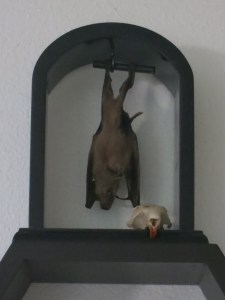
Growing up in the 1980s and ’90s, unless you were in the very few cities with strong scenes, goth got mixed in with all the other alternative styles and it wasn’t such a big deal to drift between them a bit. At my small high school* there wasn’t even a super clear division between alternative and mainstream so there wasn’t much pressure to pick a label or even a super specific style.
Coming from that background, this pressure to fit yourself into a little black box–cyber, victorian, trad, whatever–feels suffocating to me, and a bit superficial and picky. Fashion is great and can be an important way to express yourself, but I’d never judge anyone’s gothiness by it. Especially these days, when it’s so easy to copy or buy a look off the internet without knowing one thing else about the culture.
In general, the creation of these little goth boxes doesn’t bother me. I’m sure that for some people, setting limits is inspiring. Just like Shakespeare took the structure of the sonnet and used it as a frame for his incredible creativity, a dedicated gothic lolita or deathrocker might find perfecting that one specific style an exciting project. It seems silly to expect every goth to work that way, though, and that expectation stunts the subculture. To grow and thrive, the subculture needs a certain number of members willing to borrow and adapt art, music, and styles from different subgenres and from outside goth. We need the sort-of-goths and part timers as much as we need the fulltime goth gods and goddesses.
People advocate the “True Goth” mystique for all sorts of reasons, but one of the most understandable is the fear of watering down the subculture. Half the point of subcultures is finding others like you, and if you have to wade through a swamp of people who dress like you but are otherwise totally different, then what’s the point? It’s a problem for punk and rap even more than for goth, and it’s no wonder some goths feel threatened or frustrated when mainstream attention attracts people who aren’t actually creatures of the night.
I think it’s smart and reasonable to keep pushing babybats to learn about goth music and history, to check out some classic horror, to grow into the subculture. Asking people to learn about goth usually results in “true goths” developing a lifelong interest in one aspect or another of goth culture, and the rest getting bored and drifting off somewhere else. Asking for more than that is asking too much. If you thrive on “gothier than thou” drama I’m sure you’ll find plenty of dark douchelords to fight with, but the rest of us just want to like what we like without judgment. Shunning newcomers and part-timers and people with (gods forbid) non-goth interests can feel great, but in the end it makes you the dark dictator of a very small kingdom indeed. Which is far less romantic than it sounds.
*My high school experience was probably different from most. I suspect the mainstream vs. alternative divide was deeper for most kids back then. It’s a long story and not super relevant to this post. Feel free to ask if you’re curious, though.


 Oddly Cultured
Leave a reply to Geekgoth Tiamat Cancel reply