My youngest sister recommended The Glutton to me. “It had SO MANY words I didn’t know,” she said, “and you have the biggest vocabulary out of anyone I know.” She’s no lightweight herself when it comes to the English language, so this was high praise. The flattery felt good. The flattery also made the title stick in my head. On my book spree in Durango last month I thought to look for it.
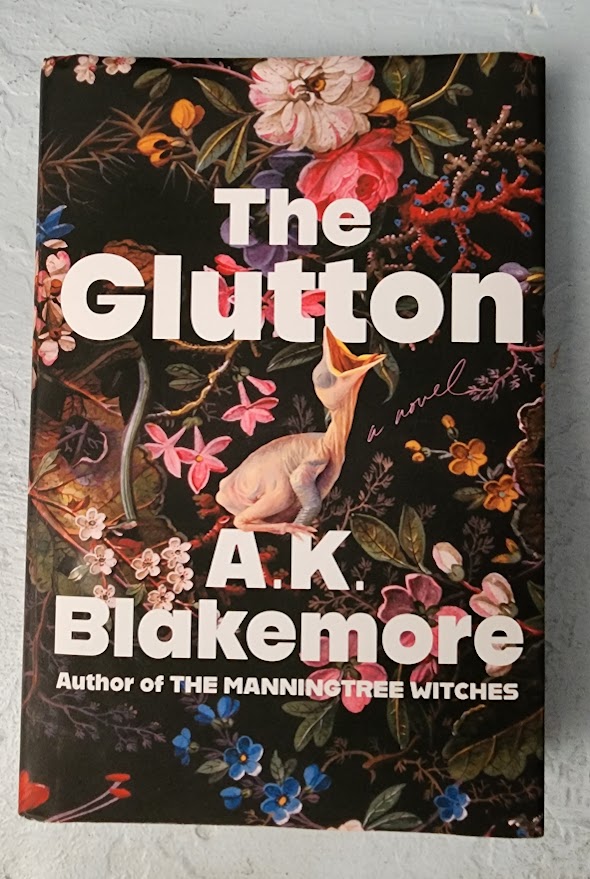
I was expecting technical words, or archaic words to give the story an older feel. I was half expecting something pretentious or stuffy. Instead, I found a deeply poetic sensibility. There were definitely words like ‘violaceous‘ and ‘sacerdotal‘ peppered throughout, but I didn’t find the big words distracting. I like big words, my sister’s right about that, but they can be a sign that the author’s trying too hard or showing off at the expense of the story. Blakemore’s big words, though, largely felt chosen for their beauty and emotional power. They fit the story, which was haunting and emotionally complex.
It was also disgusting, disturbing, and loosely based on a true story.
In France, in the late 1700s, lived a real medical oddity called Tarrare. Tarrare could and would eat literally anything and everything, yet he never seemed to be full. According to the stories, he was quite thin, in fact. He spent some time in military service, some time as a sort of side show act, and quite a bit of time being studied and (sort of) treated by baffled doctors.
The Glutton is an artistic rendering of his story, sticking pretty closely to its broad outlines while using imagination to fill in the considerable gaps in the historical record. Tarrare is, by turns, a figure to inspire contempt, curiosity, and deep empathy and pity. He is both utterly grotesque and sadly relatable. The pace is quite slow, which gave me plenty of time to develop a connection to the various characters, not just Tarrare himself but his various carers and exploiters, and to really spend time in Blakemore’s created world. It’s hard to say I enjoyed a tale as tragic as Tarrare’s, exactly, but I found it deeply moving.
If you enjoy poetic, somewhat literary stories you should check this one out. Be warned, though, that Tarrare was rumored to eat live animals and possibly worse, and Blakemore absolutely dramatizes some of this. True though it may be, it’s not a story for the sqeamish or sensitive.
And with that, I’ll end my little review. Until next time, I wish you good reading. –Corvus
 Oddly Cultured
Leave a comment