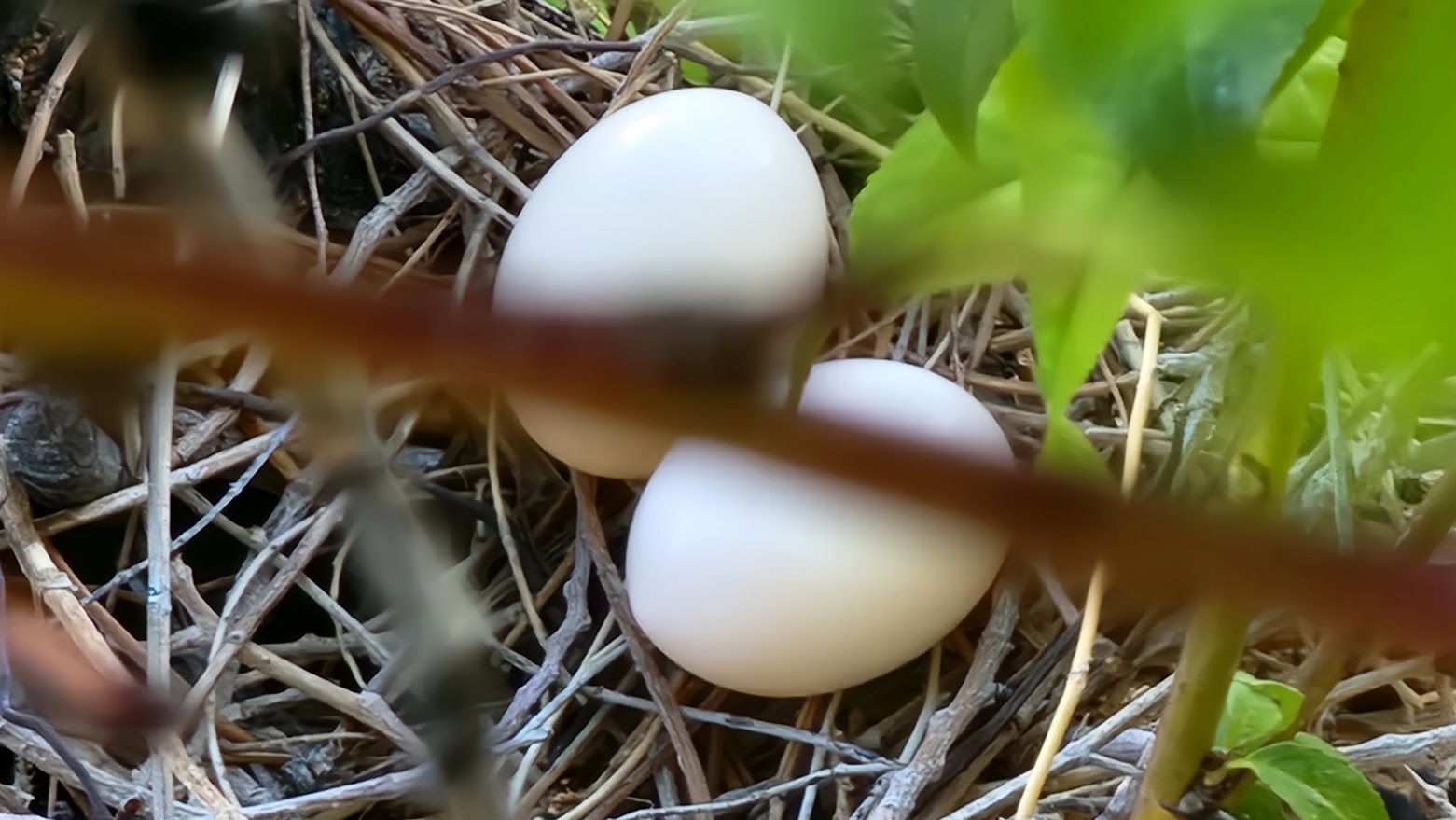
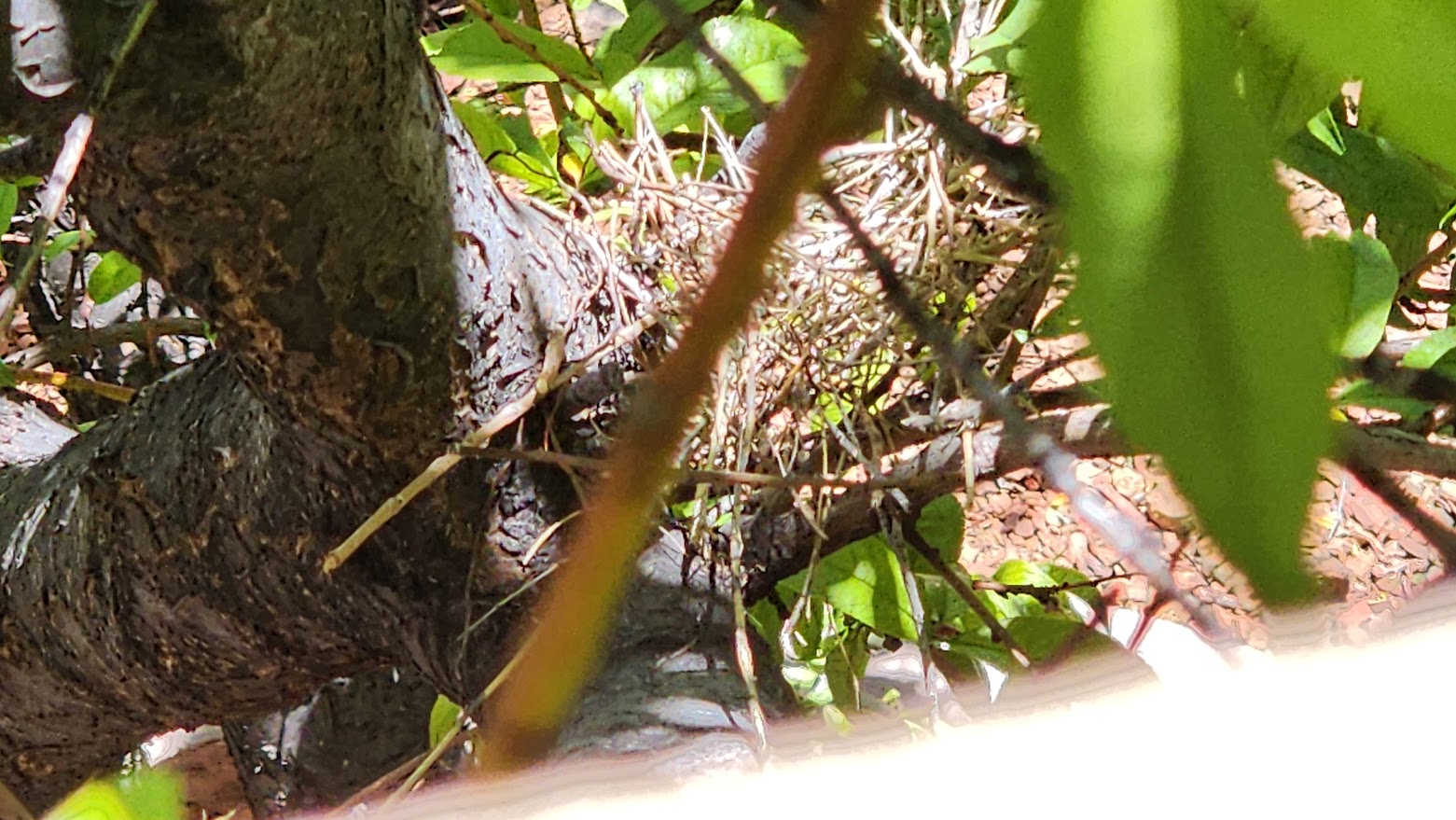
I have sad news about the pigeon nest. We were excited to see a second egg, but yesterday I went to take a peek and the eggs were gone. At first we thought the recent high winds shook them out of the nest, but we didn’t find any signs of broken eggs on the ground so I suspect they were stolen by another animal. Pigeon eggs might be a bit big for crows or squirrels but we also get racoons on occasion, and they’re definitely big enough to eat a pigeon egg or two. We still have pigeons hanging out on our roof and gutters, though, so there might be some safer nests around where our prying eyes can’t get a good look.
I just finished reading Slow Birding, by Joan Strassmann, and our bird drama was a perfect example of what Strassmann wants us to do. She wants us to slow down and really observe the natural world right around us instead of thinking of nature as something separate or exotic. Instead of spending long chapters explaining what a great idea this is, Strassmann picks about a dozen common birds she can see within a half hour from her Missouri home and writes about them. She describes where and when she sees them (in her backyard, local parks, nearby nature preserves), tells us interesting facts discovered by various scientists, and explains the experiments those scientists did to find out these facts.
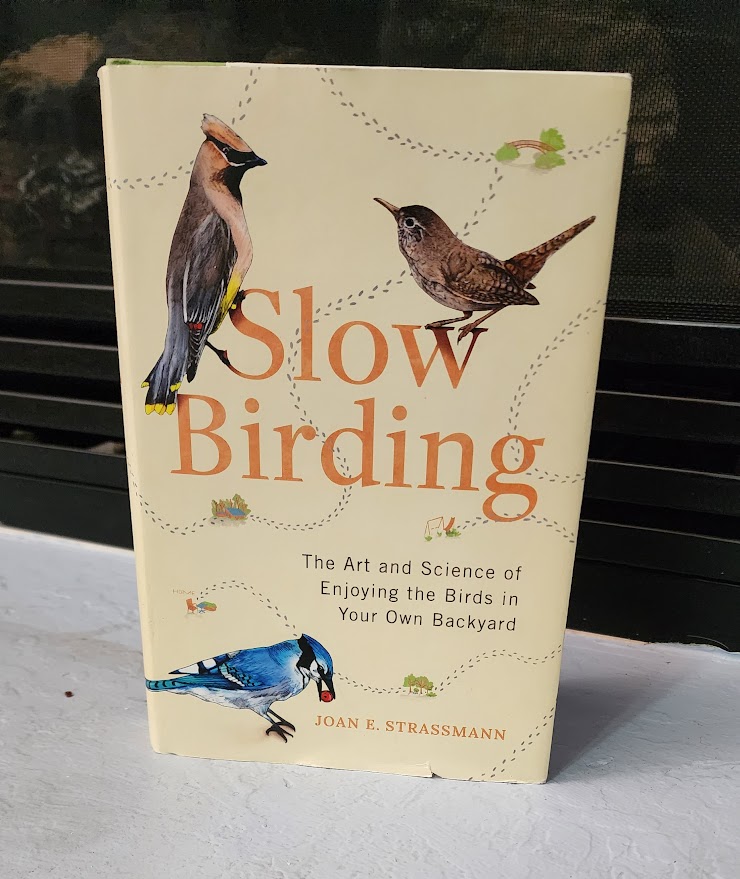
It was a pleasant read. Doing science on birds sounds kind of tedious, to be honest; lots of lying in fields recording how many times chicks peck each other or which bird lands on which branch of a fir tree. The results are often kind of interesting, though, and Strassmann does a great job showing us just how complex bird behavior is when we really take the time to look. I very much agree with her that even in cities there’s a wealth of nature to get to know, so I really appreciated her focus on common birds that we often take for granted. Since the focus is so local, some of the birds discussed aren’t nearly so common where I live, but many of her birdwatching tips can certainly be applied to my own local birds, or yours.
I picked up this book last winter on a whim. It was on sale, and it reminded me of my dearly departed dad, who was an avid neighborhood naturalist and would walk through the neighborhood and learn every tree and flower. He would have enjoyed this book, and probably would have appreciated its many useful tips on how to observe birds more closely. If you have any interest in birding, or in observing your surroundings in a more complete and meaningful way, you might want to give this book a look.
Okay, enough of this week’s nature chat. I’ve been enjoying spring and getting outside, but I’m sure my focus will return to books and crafts and such soon enough. It always does. In the meantime, I hope you’re all enjoying the world outside your door as much as I am. Until next time. –Corvus
 Oddly Cultured
Leave a comment