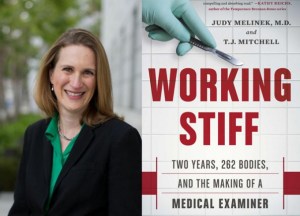
 I just finished Working Stiff: Two Years, 262 Bodies, and the Making of a Medical Examiner, by Judy Melinek and T.J. Mitchell. Melinek is the Medical Examiner, Mitchell is her husband who knows how to write. 🙂 I loved the book, but parts were hard to read. You can imagine a medical examiner’s job is hard sometimes, and Melinek doesn’t hold much back. This book is great, but not for everyone.
I’m up for almost any true story and most fictional ones, no matter how sad or weird or gruesome. Believe it or not, it’s not a morbid streak. It’s more that I think all stories should be told, even the dark and sad ones. Every true story should have witnesses, and we can listen and learn from everything. Many people, even darkly inclined people, shy away from stuff like this, and I’ve always had a weird compulsion to make up for that by looking even more at the dark and the sad and the weird and trying harder to learn something from it, to understand the world better and be a better person because of it.
Which is how I end up reading about autopsies. In vivid detail. Not everyone wants to read about this stuff, so I won’t go into specifics, but if you’re good with bodies and decay and hearing about traumatic death this is a fascinating book. Melinek shares her forensic expertise without losing (in my opinion) her compassion for the dead and for the living they leave behind. She’s honest about her personal feelings and about sometimes being jaded or tired or judgmental, as well as having a real respect for the forensic process and the people she deals with at one of the worst times in their lives.
This book didn’t really give me deep thoughts about life and death. Instead it made me think of all the people who deal with death every day so that you and I don’t have to, and how important and thankless that work can be.
Most of the book, and most of Melinek’s job, was ordinary death. Illness, medical complications, accidents, suicide, drug overdose. There are so many ways to die, and each body tells a story if you know how to read it. These stories were sometimes gross (decomposition doesn’t sound pretty), once or twice funny, and always full of interesting medical facts. For most of the book I was able to put myself in the doctor’s shoes and read about strap muscles and vital reaction with a scientist’s detached interest. There were moments, though, when the sad stories behind those clinical details were hard to read, just as they seemed hard for the doctor to put aside as she did her work.
The hardest parts to read were near the end. A couple of the murders she described really tugged at my heartstrings, but Melinek’s description of the 9/11 terrorist attacks and her office’s exhausting efforts to identify remains and give families some certainty about their loved ones had me bawling. I was states away during the attacks and didn’t know anyone personally involved, and though I followed the news like everyone else it didn’t really cover the awful details people like Melinek had to process every day for weeks. It brought back memories while really bringing home sorrows I’d never even thought of. With more recent European terrorism and U.S. disasters in mind, it made for some tough reading and dark thoughts.
Like I said, this kind of reading is not for everyone. That kind of job is not for everyone. But I’m glad there are people who can do it, speaking for the dead and doing what they can to help the living cope with death. I hope this book inspires a few others to continue the work, and I hope understanding the detailed human cost of violence, all the pain it causes for everyone involved, helps push humanity toward more peace and compassion.
 Oddly Cultured
Leave a comment